Jet lag can affect anyone travelling across time zones, often leaving you feeling tired, disoriented, and out of sync with your destination. Preparing your body in advance can help reduce the impact and support a smoother adjustment.
What Is Jet Lag and Why Does It Happen?
Jet lag occurs when your internal body clock becomes misaligned with a new time zone. Your circadian rhythm controls sleep, digestion, and energy levels.
When this rhythm is disrupted, symptoms may include:
In this latest video, our clinical Pharmacist Abraham Jacobson Khodadi discusses how to have stronger erections, what actually helps and what medications can help you.
There are 3 things I’d do straight away to help with stronger erections, and as a certified Advanced Clinical Practitioner, it’s exactly what I tell ED patients in clinic.
Starting today, don’t treat erectile dysfunction like it’s “just in your head” or “just testosterone” — I’m going to show you the 3-part erection pathway I use with patients, because when you know which part is failing, the fix becomes obvious.
Stay with me, because we’ll go through what actually helps first and when medication makes sense.
Travellers’ diarrhoea is one of the most common health concerns for people travelling abroad, particularly to destinations where food hygiene and water quality may differ from the UK. While it is often short-lived, it can quickly disrupt your holiday if you’re not prepared.
Understanding how it happens and what to expect can help you travel with more confidence and minimise disruption.
What Causes Travellers’ Diarrhoea?
Travellers’ diarrhoea is typically caused by bacteria that enter the digestive system through contaminated food or water. Because your body may not be familiar with these bacteria, it can react more strongly.
This can lead to symptoms such as:
Loose stools
Stomach cramps
Nausea
Urgency
The risk can vary depending on your destination and local hygiene practices.
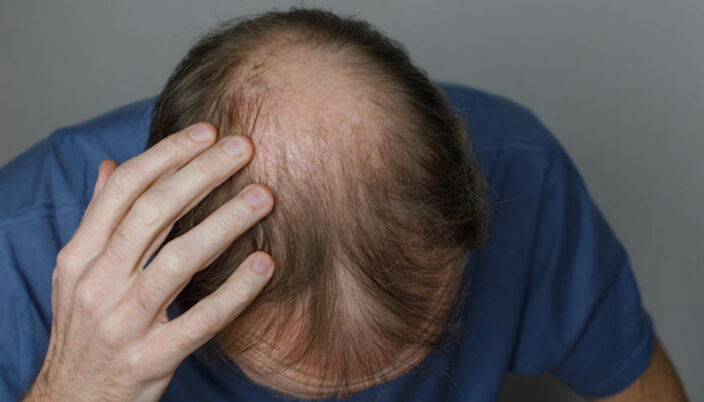
Male hair loss is incredibly common, but that doesn’t make it any less frustrating. Whether you’re noticing thinning on the top of your head, a receding hairline, or more hair shedding than usual, understanding what’s happening is the first step to managing it.
In this guide, we answer the most searched questions around male hair loss — including what causes it, whether stress plays a role, and what treatments are available.
What are the main reasons for male hair loss?
The most common cause of male hair loss is male pattern baldness, also known as androgenetic alopecia.
This condition is driven by a hormone called DHT (dihydrotestosterone). DHT is a derivative of testosterone and drives male development, including prostate growth, libido, voice deepening, and body hair. However it can also cause hair follicles that are susceptible to it, to shrink and the hair growth cycle to shorten.
Over time, this leads to:
Thinner, weaker hair
Slower regrowth
Eventually, hair stopping growing altogether
Genetics play a major role, as how sensitive the hair follicles are to DHT is largely inherited, which means if hair loss runs in your family, you’re more likely to experience it too.
Age is another factor, as hair growth naturally slows down over time.
You’ve probably been told erectile dysfunction only happens as men get older – but that’s not true. Erectile Dysfunction can affect men of any age, and it’s far more common than people realise.
In this latest video, our clinical Pharmacist Abraham Jacobson Khodadi shows you what’s really happening in the body, the most common causes, how lifestyle changes can improve it, and what to know about treatments!
Erectile dysfunction (ED) is common and treatable. One of the most widely used medications is sildenafil — the generic form of Viagra. In this guide, we break down everything you need to know about sildenafil in clear terms, just like you’d expect from Doctor Fox.
What Is Sildenafil?
Sildenafil is a prescription medicine that helps men with erectile dysfunction achieve and maintain an erection suitable for sexual activity. It belongs to a group of drugs called PDE5 (phosphodiesterase type 5) inhibitors and is widely prescribed in the UK.
As the generic form of Viagra, sildenafil contains the same active ingredient and works in the same way — but is usually much more affordable.
You’ve probably been told bloating just happens after certain meals – but that’s not true.
In this latest video, our clinical Pharmacist Abraham Jacobson Khodadi shows you step-by-step how to reduce bloating, what gets rid of bloating, and how to improve digestion using simple science-backed changes that give real relief from bloating and gas.
Finasteride is one of the most commonly prescribed treatments for male pattern hair loss, but how effective is it at encouraging regrowth? For those concerned about thinning hair or a receding hairline, it’s natural to ask whether the medication can restore density, prevent further shedding, and what side effects may occur.
This blog explains how finasteride works, what results can realistically be expected, and addresses common questions such as whether it can help regrow hairline, can it cause weight gain, and can it cause hair loss.
How Finasteride Works
Finasteride 1mg reduces levels of dihydrotestosterone (DHT), the hormone responsible for shrinking hair follicles in men with androgenetic alopecia. By lowering DHT levels in the scalp, the medication helps prevent further hair loss and can promote regrowth where follicles remain active.
It is taken once daily and is intended for long-term use.