
Male hair loss is incredibly common, but that doesn’t make it any less frustrating. Whether you’re noticing thinning on the top of your head, a receding hairline, or more hair shedding than usual, understanding what’s happening is the first step to managing it.
In this guide, we answer the most searched questions around male hair loss — including what causes it, whether stress plays a role, and what treatments are available.
What are the main reasons for male hair loss?
The most common cause of male hair loss is male pattern baldness, also known as androgenetic alopecia.
This condition is driven by a hormone called DHT (dihydrotestosterone). DHT is a derivative of testosterone and drives male development, including prostate growth, libido, voice deepening, and body hair. However it can also cause hair follicles that are susceptible to it, to shrink and the hair growth cycle to shorten.
Over time, this leads to:
- Thinner, weaker hair
- Slower regrowth
- Eventually, hair stopping growing altogether
Genetics play a major role, as how sensitive the hair follicles are to DHT is largely inherited, which means if hair loss runs in your family, you’re more likely to experience it too.
Age is another factor, as hair growth naturally slows down over time.
Does stress cause male hair loss?
Stress is often blamed for hair loss, but in most cases, it is not the primary cause of male pattern baldness.
Hair loss in men is usually linked to hormones and genetics, rather than lifestyle alone. However, stress may:
- Trigger temporary shedding
- Make existing hair loss appear worse
If you’re experiencing ongoing thinning, it’s more likely to be related to male pattern hair loss rather than stress alone.
Can you prevent male hair loss?
A common question is: “How do I prevent male hair loss?”
The reality is:
- Male pattern baldness cannot be completely prevented
- But it can be slowed down and managed effectively
Starting treatment early gives you the best chance of maintaining your hair for longer. Alternatively, hair styles can be changed to manage the appearance.
What actually works for male hair loss?
While there’s no permanent cure, there are clinically proven treatments that can help manage hair loss and support regrowth.
Minoxidil (topical treatment)
Minoxidil is applied directly to the scalp and works by:
- Supporting blood flow to hair follicles
- Encouraging hair to stay in the growth phase for longer
It can be used alongside other treatments to improve results.
Finasteride (tablet or topical treatment)
Finasteride works by reducing the levels of DHT in the body — the hormone responsible for shrinking hair follicles.
By lowering DHT levels, it helps:
- Slow down hair loss
- Maintain existing hair
It needs to be used continuously to keep results.
Finasteride can cause unwanted side effects so it is important to read about these and be fully aware before commencing treatment..

Combination approaches
Using treatments together can target hair loss in different ways:
- One addresses the underlying cause (DHT)
- The other supports hair growth at the scalp
Doctor Fox offers treatment options designed to make this approach simple and accessible.
Hair transplant
A hair transplant is a surgical option for male pattern hair loss. Hair is taken from the back or sides of your head and moved to thinning areas. It can be expensive and requires some recovery time.
It is often advised to continue treatments after a hair transplant, like finasteride or minoxidil, to maintain overall hair density.
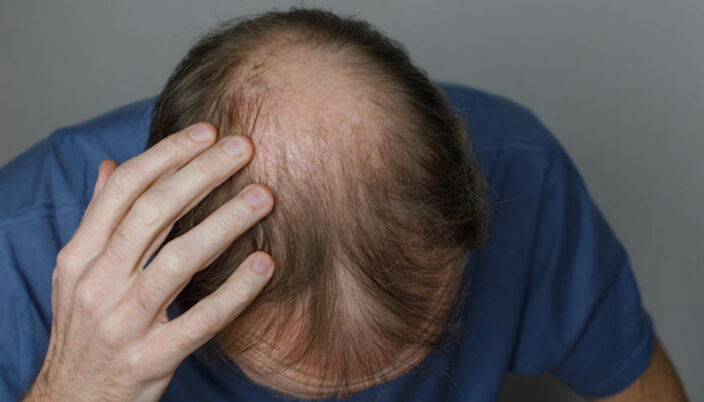
Male hair loss on the top of the head
Hair loss on the top of the head (crown) is one of the most common early signs of male pattern baldness.
This area is particularly sensitive to DHT, which is why thinning often begins here.
The good news is that:
- Crown hair loss is often more responsive to treatment
- Early action can help maintain density in this area
Can male hair loss be reversed?
This depends on how far the hair loss has progressed.
- If hair follicles are still active, treatment can help improve thickness and slow further loss
- If follicles stop producing hair completely, regrowth becomes much less likely
This is why acting early is important.
When should you start treatment?
Early signs to look out for:
- Thinning at the crown
- A receding hairline
- Increased shedding
Starting treatment at this stage can help you keep more of your existing hair.
If you would like more information about male hair loss please visit our Male Hair Loss page where you can access more information and links to treatments.